Chicago does not lack for grand plans. What it needs, over and over, is the discipline to recognize what is already here: the buildings, bridges, halls and industrial shells that still carry meaning, labor and possibility.
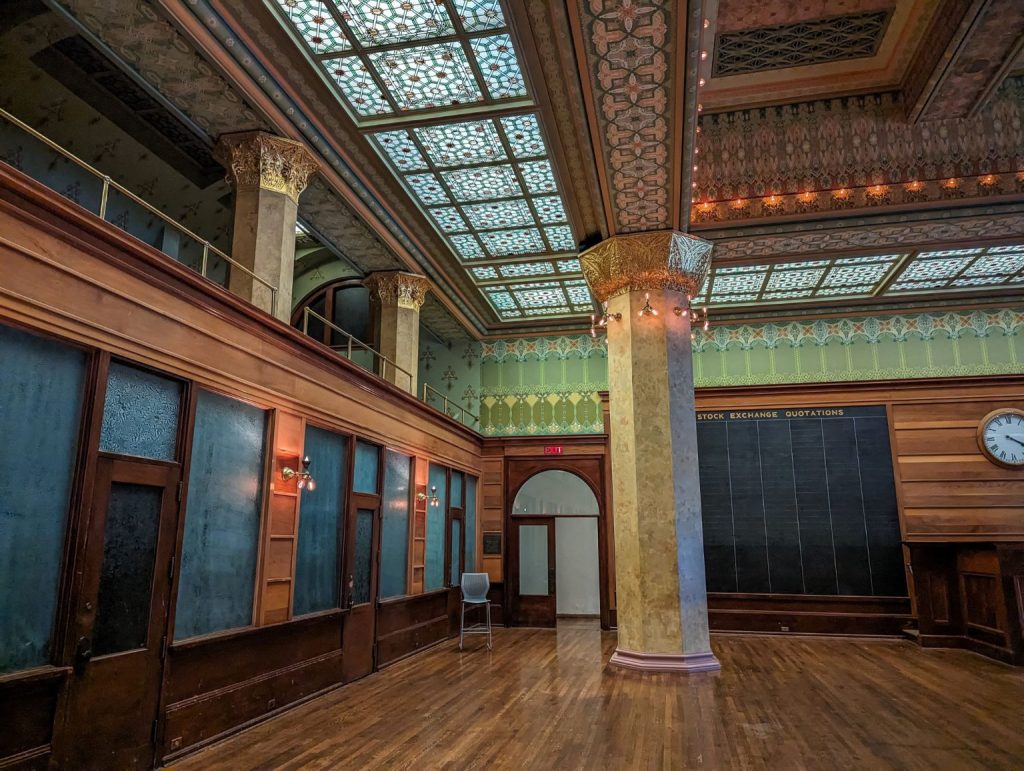
That is why Preservation Chicago’s 2026 “Most Endangered Buildings” list landed with real weight this spring. As reported by Block Club Chicago and the Chicago Tribune, this year’s list reaches across the city: the Art Institute’s Chicago Stock Exchange Trading Room and McKinlock Court, river bridges and tender houses, labor union halls, St. Mary of the Assumption in Riverdale, the Chicago Loop Synagogue, South Park Terrace Apartments and more. Different neighborhoods, different building types, same underlying question: will Chicago treat its built environment as disposable, or as a living civic asset?
The most useful answer may already be standing on Elston Avenue.
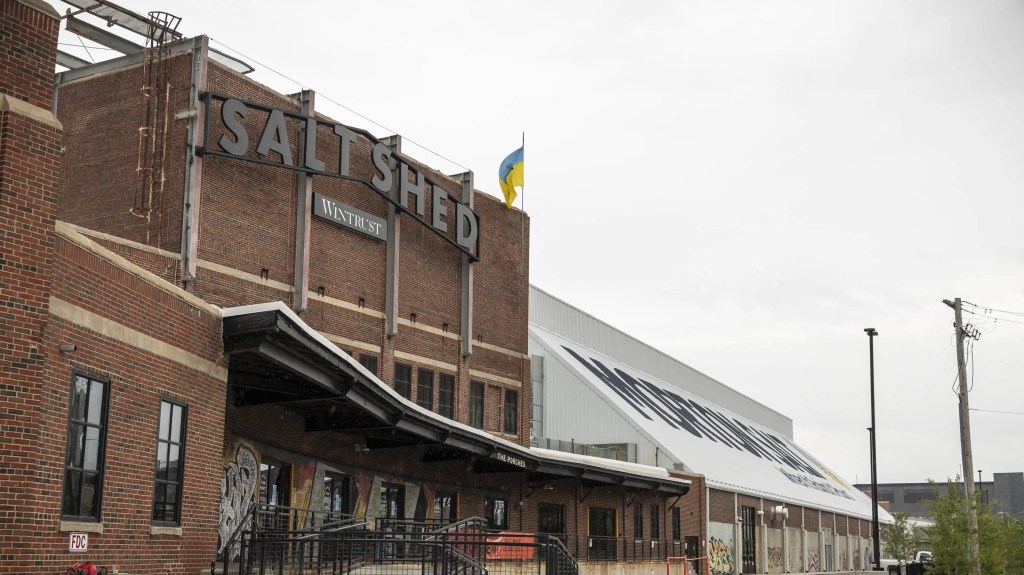
A few years ago, the old Morton Salt complex could have been flattened and replaced with something generic. Instead, it became the Salt Shed—one of the clearest local examples of adaptive reuse done with respect for the original structure. WBEZ noted that the team behind the project worked to keep as much of the original material as possible, preserving the floors, ceilings and walls so that visitors still understand they are inside an old salt shed. In a recent Newcity piece, the project was framed not just as a venue success story, but as a testament to the craftsmanship and hand labor required to transform a massive industrial shell into a new public space.
That detail matters. Adaptive reuse is often discussed like a planning concept or a sustainability talking point. But on the ground in Chicago, it is a maker economy story.
Reusing buildings means somebody has to study what can stay, repair what is failing, fabricate what is missing, and invent ways for old materials to meet new demands. It means metalworkers, finishers, carpenters, glass specialists, installers, stone workers, riggers and designers all have to collaborate inside real constraints. That is not romantic nostalgia. It is contemporary city-building.
Chicago’s design culture has always been strongest when architecture and fabrication stay in dialogue with each other—when concept does not float too far away from making. Whether the work is a public artwork, a custom architectural feature, a restoration detail or a new intervention inside an old structure, the city benefits when design is carried by people who understand materials, context and construction.
There is also a neighborhood dimension that gets lost when preservation debates become abstract. Buildings on the endangered list are not isolated objects; they anchor memory. A church, a union hall, a bridge tender house or a longtime apartment building can hold the identity of a block. Once those places are neglected beyond repair or erased entirely, the loss is not only architectural. It is social. Chicago becomes a little thinner, a little more interchangeable.
None of this means every old building should be frozen in amber. Cities have to change. Programs shift. Budgets are real. Some structures need new uses to survive. But Chicago should be much more ambitious about reuse as a design strategy, not a sentimental compromise. The best adaptive reuse projects do not merely save facades. They carry history forward while making room for new civic life.
That is the opportunity in front of Chicago right now. Preservation Chicago’s list is a warning, but the Salt Shed is a proof of concept. Between those two poles is the actual work: designers, fabricators, preservationists, artists, developers and neighborhoods deciding that the city’s future can be built from what is already here.
In Chicago, the next chapter of design will not be written only by new construction. It will also be written by the people with the patience and skill to remake what the city already knows.
Sources
- Block Club Chicago: https://blockclubchicago.org/2026/03/04/chicagos-most-endangered-buildings-2026-yukon-building-labor-union-halls-and-south-side-apartments/
- Chicago Tribune: https://www.chicagotribune.com/2026/03/04/chicago-endangered-buildings-pope-leo-church-art-institute/
- WBEZ: https://www.wbez.org/architecture/2024/06/24/whats-that-building-the-salt-shed
- Chicago Architecture Center: https://www.architecture.org/events-programs/chicagos-7-most-endangered-buildings-in-2026
- Newcity Design: https://design.newcity.com/2026/04/17/inside-the-making-of-the-salt-shed/
 Artisanal Metals
Leave a comment