One of the more interesting questions in architecture is not how to preserve the past, but how to continue it without flattening it.
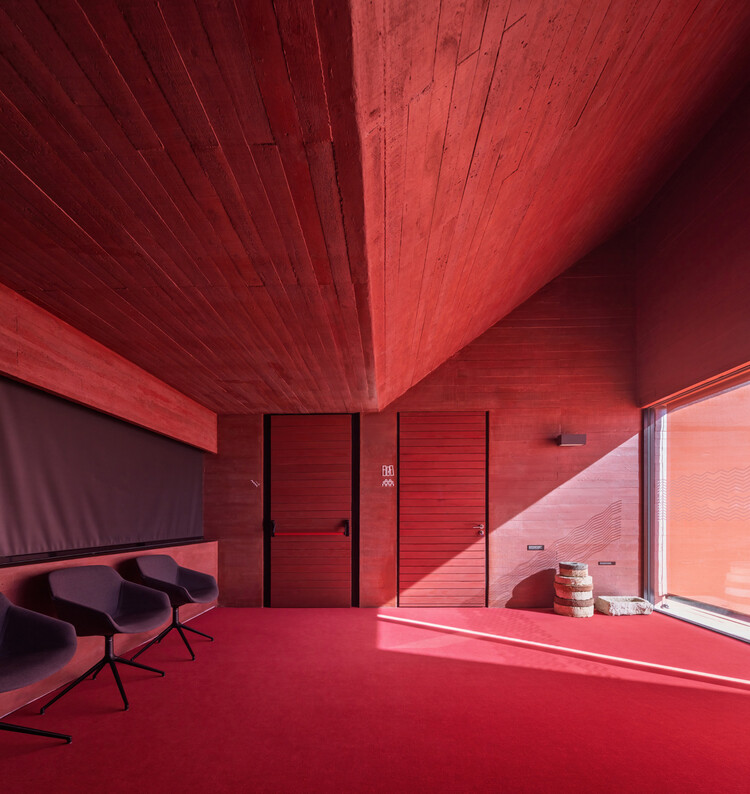
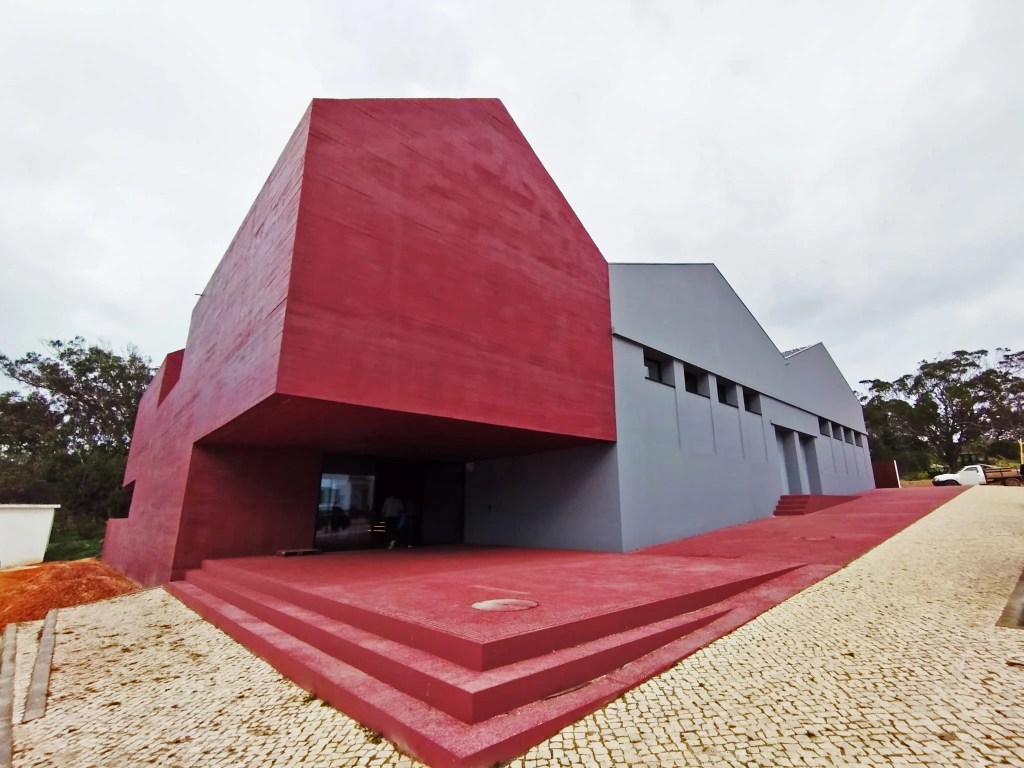
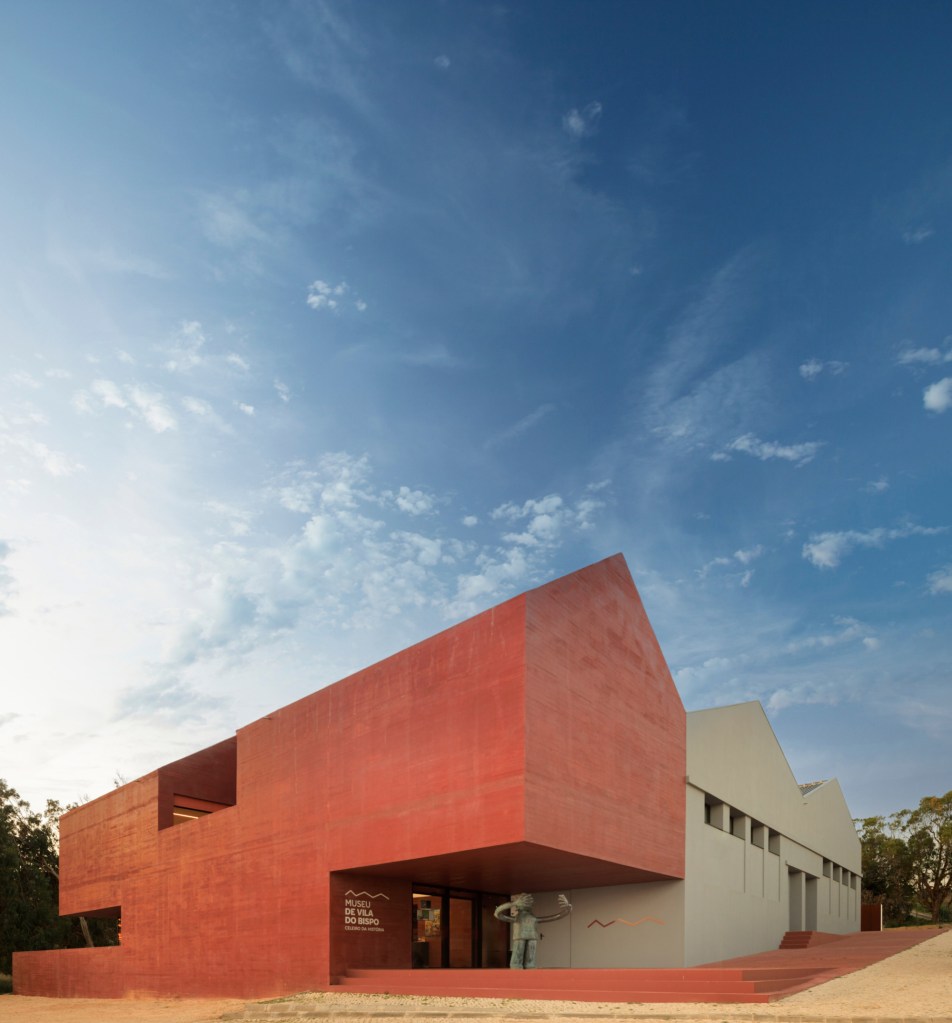
Spaceworkers’ Vila do Bispo Museum gets at that tension beautifully. Two existing granaries are transformed into exhibition space, while a new red-concrete volume carries the social and administrative program. What stands out is the refusal to make the addition feel like a branded object dropped onto a historic site. The new work echoes the pitched logic of the granaries, yet its color gives it agency.
That feels important.
Too often, adaptive reuse swings toward one of two extremes: nostalgic imitation or self-conscious contrast. The stronger move is harder. It requires reading what is already there—structure, rhythm, civic memory, landscape—and then adding something that is undeniably contemporary without becoming indifferent.
I’m especially interested in the choice of pigmented concrete here. Color is not treated as finish. It becomes a spatial argument, tying the new volume back to the Algarve’s ochre and rust tones while making the intervention legible in its own time.
For those of us working between fabrication, architecture, and cultural space, this is the real challenge: how do we make additions that belong to a place without disappearing into it?
That question applies just as much to objects, interiors, and public art as it does to buildings.
Source Notes
- Source: Dezeen
- Original article: https://www.dezeen.com/2026/04/26/spaceworkers-vila-do-bispo-museum/

 Artisanal Metals
Leave a comment