Chicago has never lacked for big design gestures. We are the city of lakefront plans, skyline arguments, and civic-scale ambition. Looking back on this spring, however, some of the most interesting energy in Chicago’s design world did not come from a single marquee building or downtown megaproject. It came from a broader, more local conversation about what design is for, who it serves, and how neighborhoods shape the city’s future.
A WBEZ story on World Business Chicago’s “Horizon Lines” competition captured that shift. The call invited architects, artists, neighborhood groups, designers, and interdisciplinary teams to imagine what Chicago could look like in 2050. What stood out was not simply the search for a bold civic idea, but the emphasis on equity, neighborhood authorship, and repairing the long-term damage caused by infrastructure that divided communities in the first place. One proposal, capping expressways with parks to reconnect neighborhoods separated by the Dan Ryan, Kennedy, Eisenhower, and Stevenson, felt especially Chicago: pragmatic, spatial, political, and deeply connected to everyday life.
That same spirit was evident throughout the spring cultural calendar. Newcity’s design roundup highlighted Architecture Week 2026 and the Chicago Architecture Center’s exhibition The Disappointed Tourist, both reminders that architecture here is not just about real estate or prestige. It is also about how people read a city, move through it, and build identity around it. The built environment carries memory, disappointment, aspiration, and possibility.
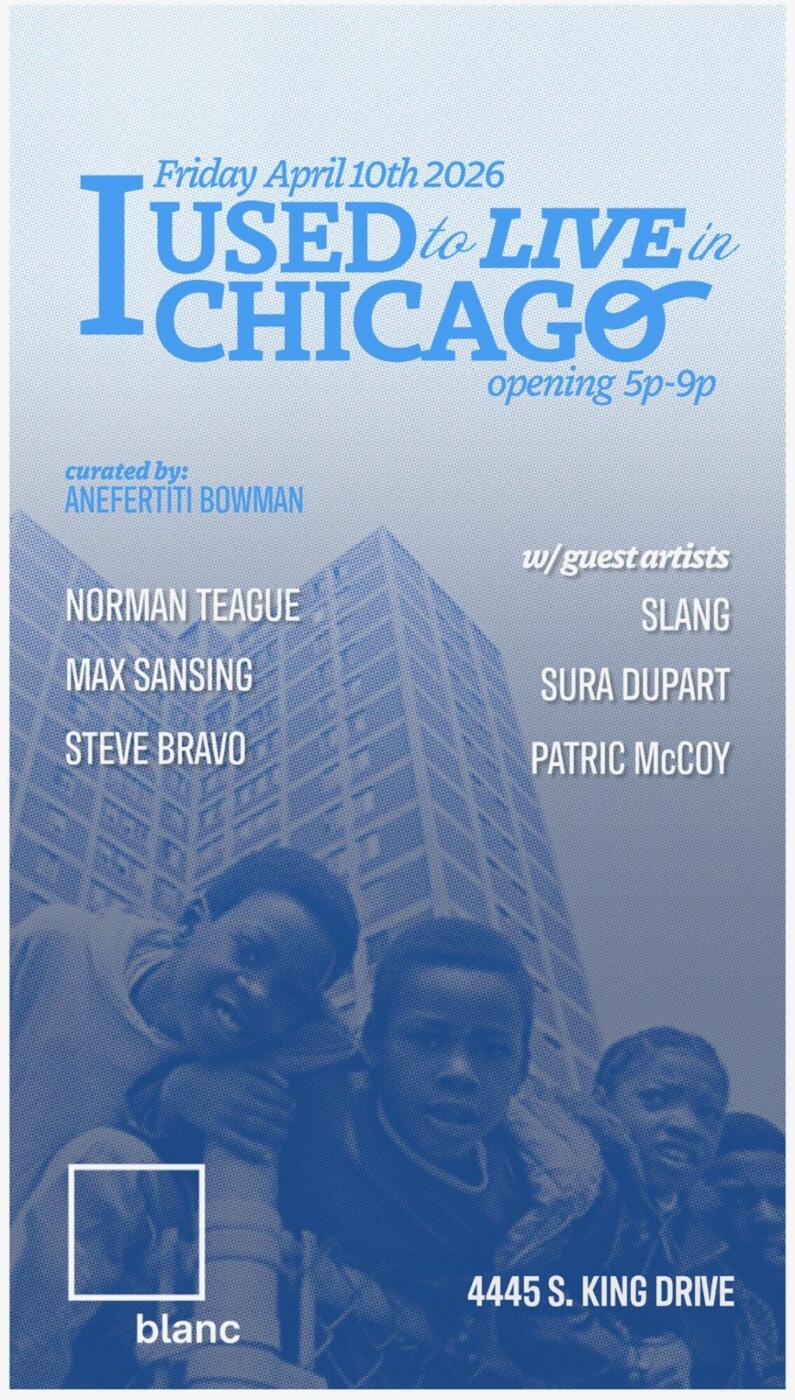
At the neighborhood level, the picture became even richer. Block Club Chicago’s roundup of exhibitions beyond EXPO drew attention to work happening well outside the usual fair-week center of gravity. One standout was I Used to Live in Chicago at Blanc Gallery in Bronzeville, featuring artists and designers whose practices span furniture, murals, and visual storytelling. Bringing those disciplines together in a historically Black neighborhood reflected the kind of place-based cultural work that often defines Chicago at its best. It was rooted, community-driven, and far removed from spectacle for spectacle’s sake.
That maker ecosystem is larger than any one studio or exhibition. It includes artists building installations for public space, designers prototyping furniture and lighting, fabricators translating ideas into durable form, preservationists finding new uses for old structures, and community institutions creating space for culture beyond the usual commercial channels. It also includes practitioners like Norman Teague, whose work continues to shape Chicago’s design discourse, alongside countless independent shops and craftspeople whose names rarely make headlines but whose labor gives physical form to the city.
Chicago does not need more boosterism. This city already knows how to celebrate itself. What it needs is continued investment in the people and places doing the slower work of cultural construction, neighborhood by neighborhood, object by object, commission by commission. The most compelling design stories of the past season were not simply about what was built, but about who had the opportunity to imagine, fabricate, and belong.
Looking back, that may be the most encouraging takeaway from the spring. Not empty civic pride, but grounded confidence. Chicago’s design future still feels ambitious, but it also appears more collaborative, more local, and more accountable to the communities that make the city worth designing for.
 Artisanal Metals
Leave a comment