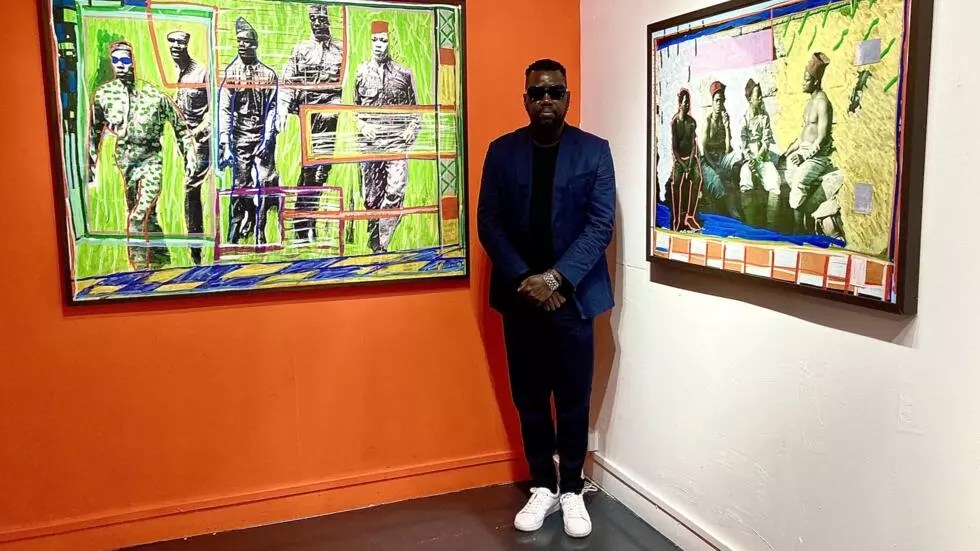
Early Life and Education
Modou Dieng Yacine’s artistic trajectory begins in Saint-Louis, Senegal, where he was born in 1970. In his youth, Yacine moved to the capital city Dakar and immersed himself in its burgeoning street culture of hip hop, graffiti, and murals, discovering new modes of Black expression and thought. He formally studied art at the National School of Art in Dakar, coming of age as an artist just as Senegal launched its first Dak’Art Biennale in the early 1990s. During that inaugural biennial, Yacine participated in workshops with visiting African American artists like Joe Overstreet, Mildred Thompson, Frank Bowling and others, encounters that deepened his love of painting and opened his eyes to the wider African diaspora in art. This early exposure laid a foundation of postcolonial awareness: he learned to question the “bonds and confinements” of colonial influence and to seek a global Black artistic voice beyond the legacy of French assimilation.
Eager to broaden his perspective, Yacine moved to the United States in the late 1990s to pursue graduate studies. He earned his MFA at the San Francisco Art Institute (SFAI) in California, a transition that expanded his practice into new media. In San Francisco, he began experimenting with photography, installation and performance alongside painting, “consistently searching for what it means to be Black in our modern society” as he navigated a new cultural landscape. His canvases became “a performative act themselves,” driven by concept and emotion, and he asked through his work “How can one’s imagination be altered?”. This period also introduced Yacine to the Bay Area’s activist art scene and to influential mentors (including curator Okwui Enwezor), further fueling his interest in art as a tool for cultural critique and dialogue.
Rise as an Artist and Educator in America and Europe
After completing his MFA, Yacine set out to build an art career in the United States, while maintaining roots in a transatlantic context. He relocated to Portland, Oregon, in the early 2000s and joined the faculty of the Pacific Northwest College of Art (PNCA), where he taught for a decade. In Portland he delved into the region’s underground subcultures and histories, all while honing his own studio practice. Inspired by Enwezor’s example of giving voice to the voiceless, Yacine also became a curator and cultural organizer. He founded an independent gallery within his studio, creating a space to “enable conversations between a local and global community” of artists. This initiative ran for ten years, fostering dialogues that connected Portland’s scene with the broader African and diasporic art world.
By the 2010s, Yacine’s reputation as both artist and educator was on the rise. He exhibited internationally and began splitting his time between the U.S. and Europe. In 2020 he presented “A Postcolonial Landscape” at Elizabeth Leach Gallery in Portland, a solo exhibition of mixed-media paintings that reimagined his personal journey in dialogue with Eurocentric art history. That same year he co-founded Blackpuffin in Chicago, a curatorial platform dedicated to elevating global Black. Eventually Yacine moved to Chicago, Illinois – a city he views as “a new center for a Black renaissance” – where he continues to curate and produce art. Chicago’s vibrant art community and history of Black excellence provided fertile ground for the next chapter of his work. By 2025, numerous prestigious venues from the Museum of Contemporary Photography (Chicago) to 193 Gallery (Paris) had showcased Yacine’s art, and publications like Chicago Gallery News and ArtDaily were featuring his projects in their pages. Modou Dieng Yacine had firmly established himself as a Senegalese-American artist bridging continents, equally at home in U.S. museums and European galleries.
Postcolonial Identity and the Migrant Experience
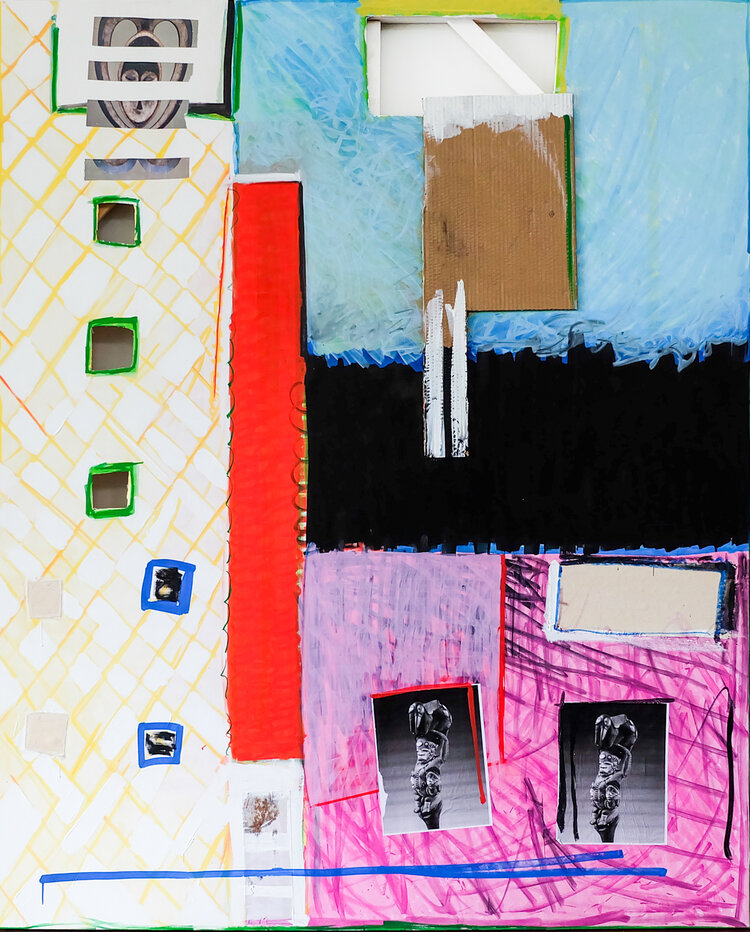
Central to Yacine’s art is an exploration of postcolonial identity – the complex sense of self for someone formed by both African heritage and Western influence. Yacine has described himself as operating from a “split identity between Blackness and Western Philosophy,” constructing his art as a “mural of archetypal cultural imagery” filtered through that dual perspective. His mixed-media works address the interplay of his African identity with a Westernized lifestyle, often interrogating how Black bodies and histories are represented (or erased) in a globalized society. For example, in A Postcolonial Landscape (2020), his paintings explicitly grappled with Black representation and erasure in art history, literally cutting into canvases to reveal the stretcher bars as a metaphor for the absence of Black artists on the traditional Eurocentric canvas. Every exuberant brushstroke and collage element in that series was an assertion of presence, a reclaiming of narrative from an art history that had long marginalized African voices.
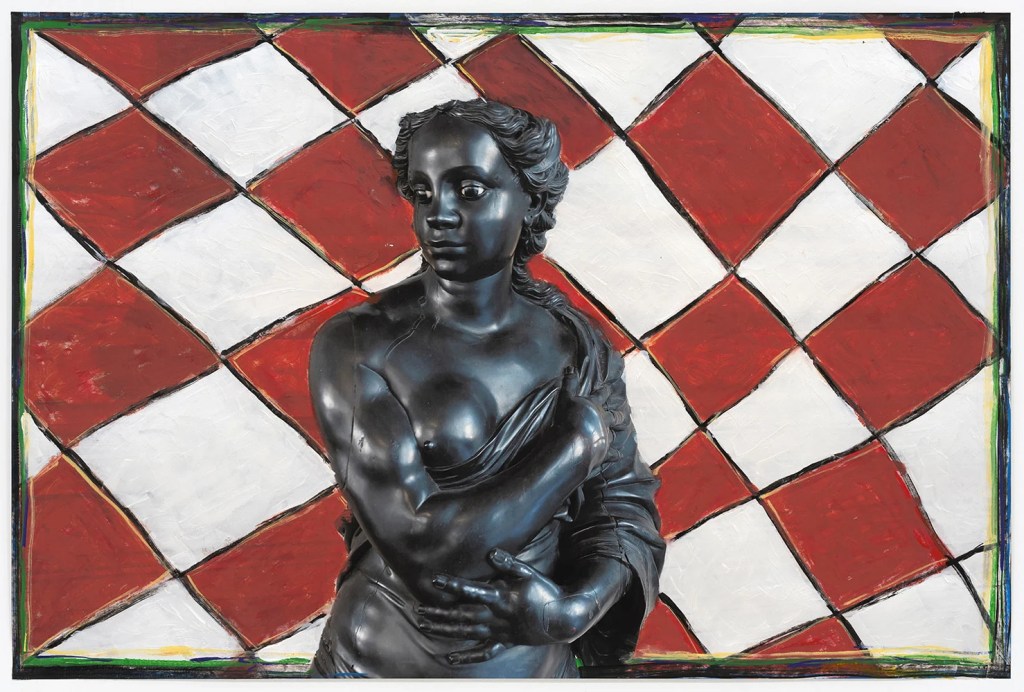
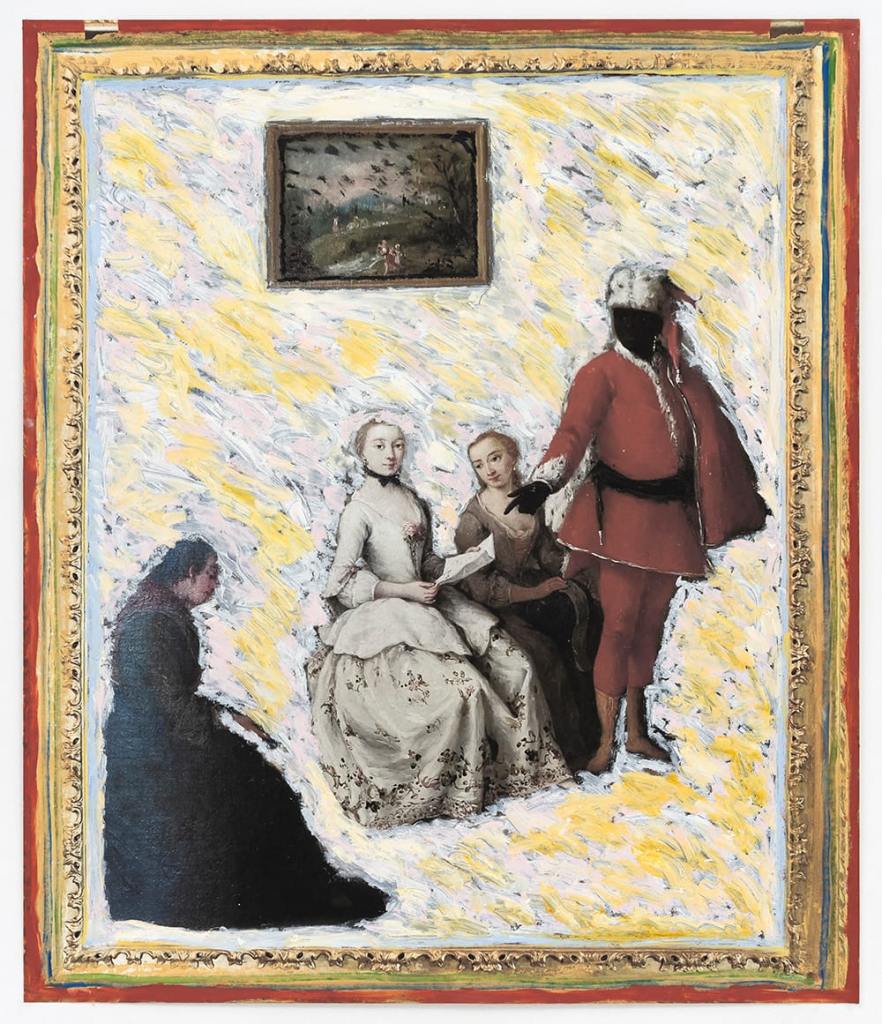
Yacine’s personal migration story – from West Africa to North America – underpins much of this work. His art often charts a journey that mirrors his own: “the story of an upbringing by a colonialist culture in a native land and the paths taken away from it, both inwardly and outward,” as he writes in one artist statement. Rather than lament displacement, Yacine approaches the diaspora experience with a spirit of joie de vivre, finding creative energy in the act of bridging cultures. In his canvases, he layers imagery from Senegal alongside references to American and European culture, creating rich palimpsests of photos, painted symbols, and even African masks that speak to a hybrid identity. The 2024 series “Black Venezia” pushed this inquiry into new territory: during a residency in Venice, Yacine examined centuries-old Venetian paintings and architecture to “unveil the presence of Black individuals” in that Renaissance city – people often hidden in plain sight in European art as servants, merchants or enslaved figures. The resulting works, exhibited in Paris as Black Venezia, carry a “deep historical genealogy” of Blackness in Europe, connecting Yacine’s own Atlantic heritage to the Mediterranean context of Venice. In this way, Yacine’s recent projects map a kind of Black Atlantic world, tracing lines of connection from Africa to America to Europe. His art insists that the postcolonial Black identity is not bound by one locale but is truly global – a mosaic of migrations, memories, and resilient cultural expressions.
Urban Architecture and Community Narratives
One of Yacine’s signature strategies is to use urban architecture as a metaphor for identity and community. “I use domesticity, familiarity and architecture of spaces as a kind of stand-in for the body,” Yacine has said, linking the idea of physical structures to personal and cultural presence. In his mixed-media paintings, brightly colored architectural facades often appear – stacked windows, iron balconies, arched doorways – forming a symbolic portrait of the communities that inhabit those spaces. These architectural motifs resonate with both strength and vulnerability, inviting viewers to peer into the “imagined interior realm” of Black lived experience. Yacine is particularly drawn to comparing cities that share parallel histories. In “Utopia Land” (2022), a solo exhibition at New Harmony Gallery, he built new composite cityscapes by merging imagery from Saint-Louis, Senegal and New Orleans, Louisiana – two port cities shaped by French colonialism and the Atlantic slave trade. By montaging elements like the ornate wrought-iron balconies and shuttered windows common to both cities, Yacine created what he called “new landscapes out of colonial structures,” envisioning an idealized place that transcends geography while acknowledging a painful shared past. This project not only highlighted architectural parallels across diaspora communities, but also suggested a hopeful unity: a utopia born from reassembling fragments of a divided history.
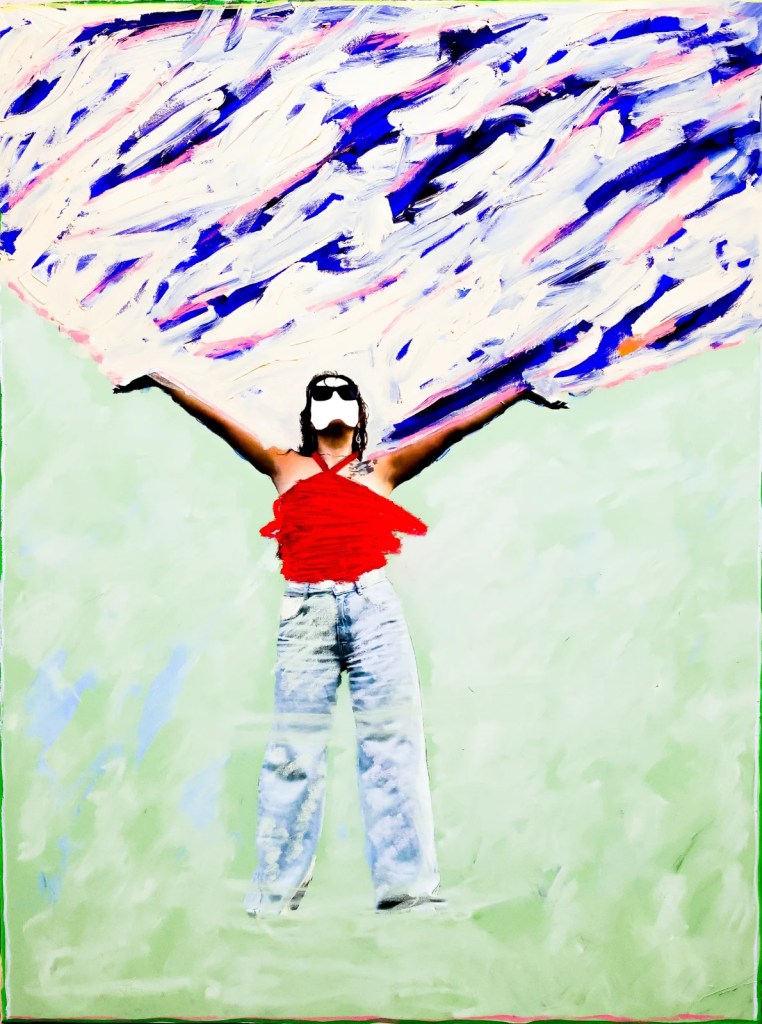
Community connection is a recurring theme that flows from Yacine’s architectural imagery. His work celebrates resilient local communities even as it addresses global issues. A recent example is 26-18 (2025), a dual exhibition at Chicago’s Povos Gallery that Yacine mounted with artist Johannes Sivertsen. The title “26-18” pointed to the two specific neighborhoods the artists call home – Chicago’s 26th Ward for Yacine, and Paris’s 18th Arrondissement for Sivertsen – grounding their work in real urban communities. Through vibrant genre scenes and city impressions, the show “explores themes of migration, global citizenship, and community” from the perspective of artists who are themselves migrants living in diaspora hubs. Yacine’s paintings in 26-18 lovingly document the everyday faces and architecture of Chicago’s West Side, turning the city itself into a protagonist. In doing so, he honors the neighbors and friends that sustain him as an artist, reinforcing the idea that art and community are mutually nourishing. This impulse to connect the local with the global has been a hallmark of Yacine’s approach since his Portland days, when he created gallery gatherings to bridge cultures. Whether reconstructing a colonial-era city in paint or depicting his Chicago block, Yacine uses architectural elements and city iconography to tell human stories of belonging, migration, and solidarity.
A Vibrant Visual Language: Performance, Color, and Storytelling
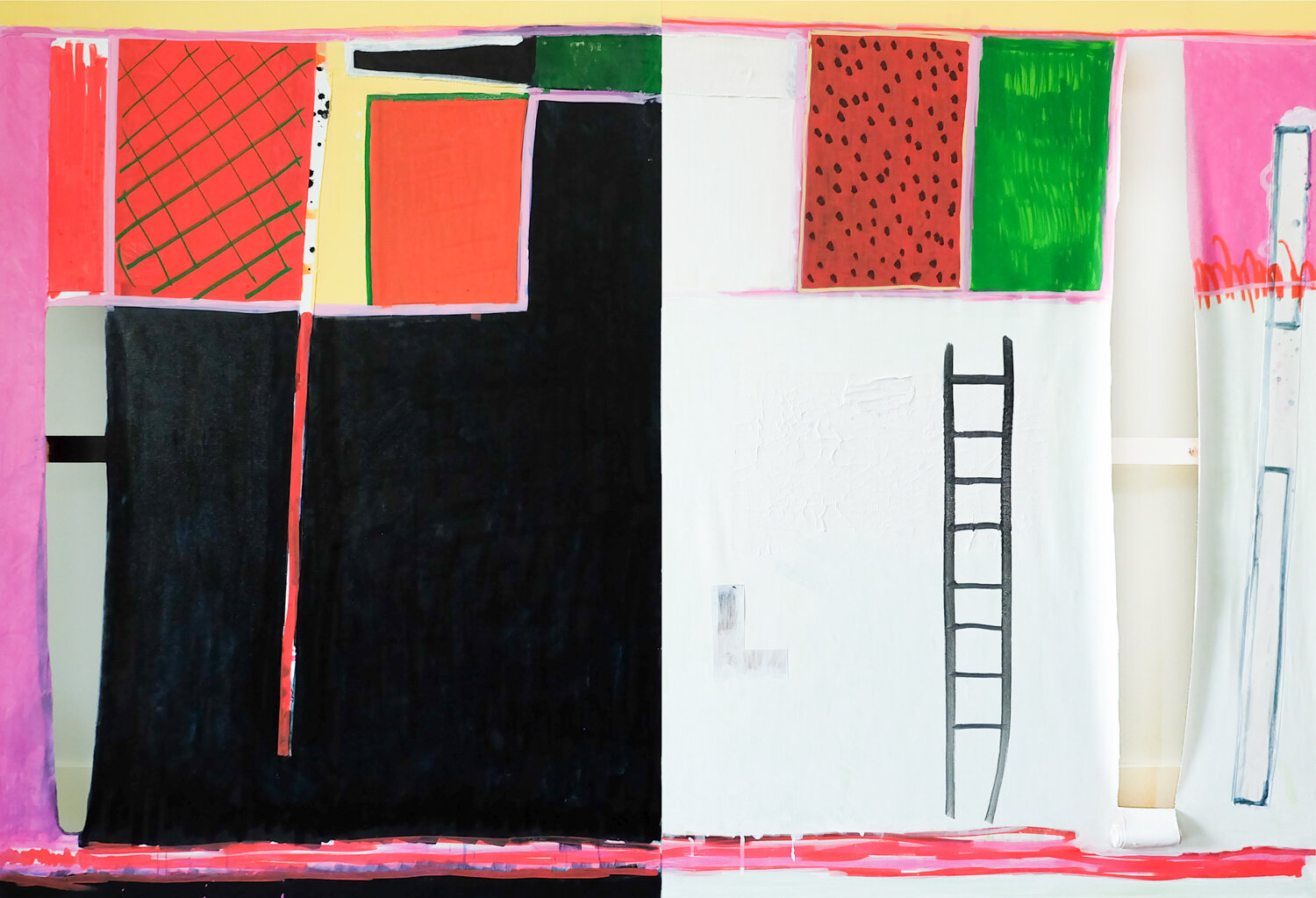
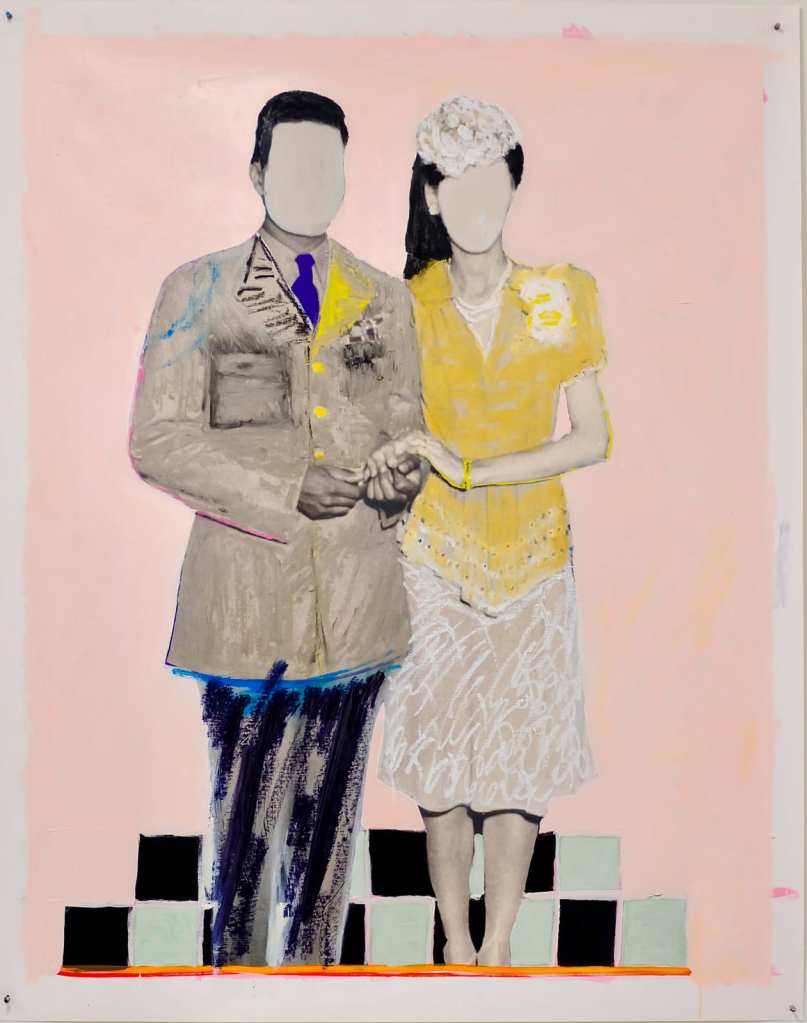
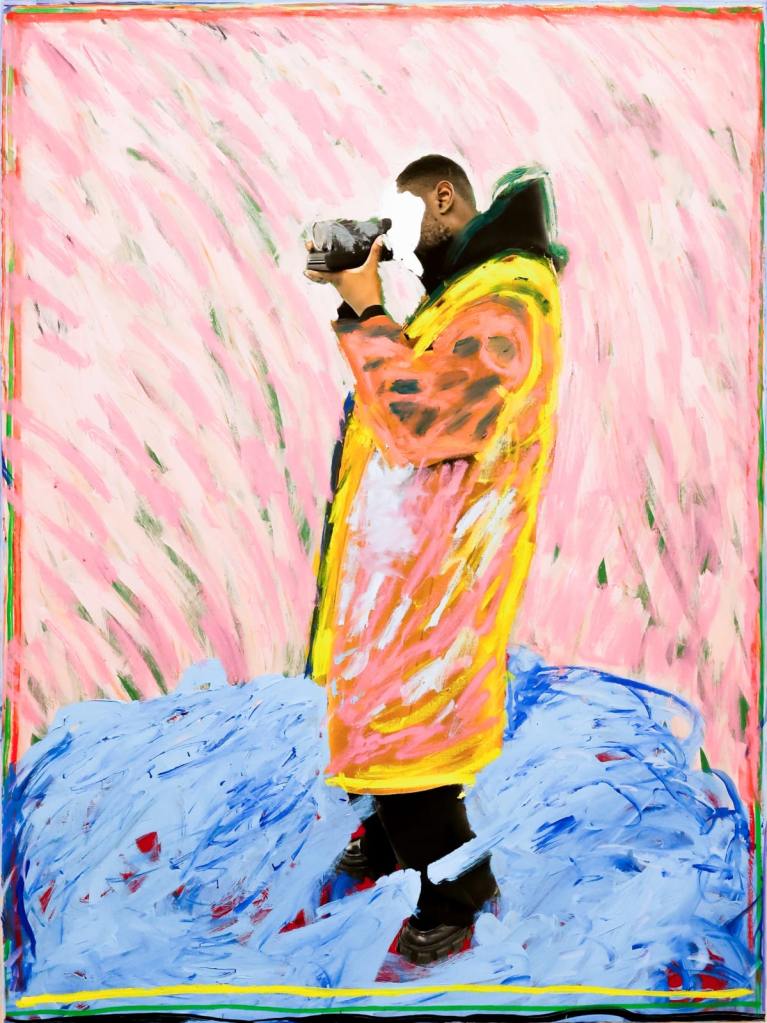
While Yacine’s themes are intellectually dense, his formal approach to art is equally dynamic and accessible. He is a true multimedia artist: painting remains his primary mode, but he freely blends in photography, collage, printmaking, and even performance to serve the concept at hand. His studio process can be likened to a DJ sampling tracks – he “layers, samples, mixes and plays” with imagery and materials to construct visually rich narratives. Yacine’s canvases burst with gestural energy and prismatic color, a palette he partly credits to the landscapes of his life: the sunbaked tones of the Sahel desert meet the bold, shifting hues of the American Midwest. Across his recent bodies of work, one sees a signature interplay of geometric pattern and expressive mark-making – grids, zig-zags, and loops painted in exuberant oranges, blues, and greens. These lively colors and patterns convey a sense of joy and resilience, even when the subject matter nods to historical traumas. Yacine often balances abstraction with representational fragments; for instance, a silhouette of a figure or a photographic transfer of an African mask might appear embedded in an abstract field of color. This hybrid visual language allows him to weave stories on multiple levels: up close, one discovers layers of meaning and hidden images beneath the surface splashes of paint.
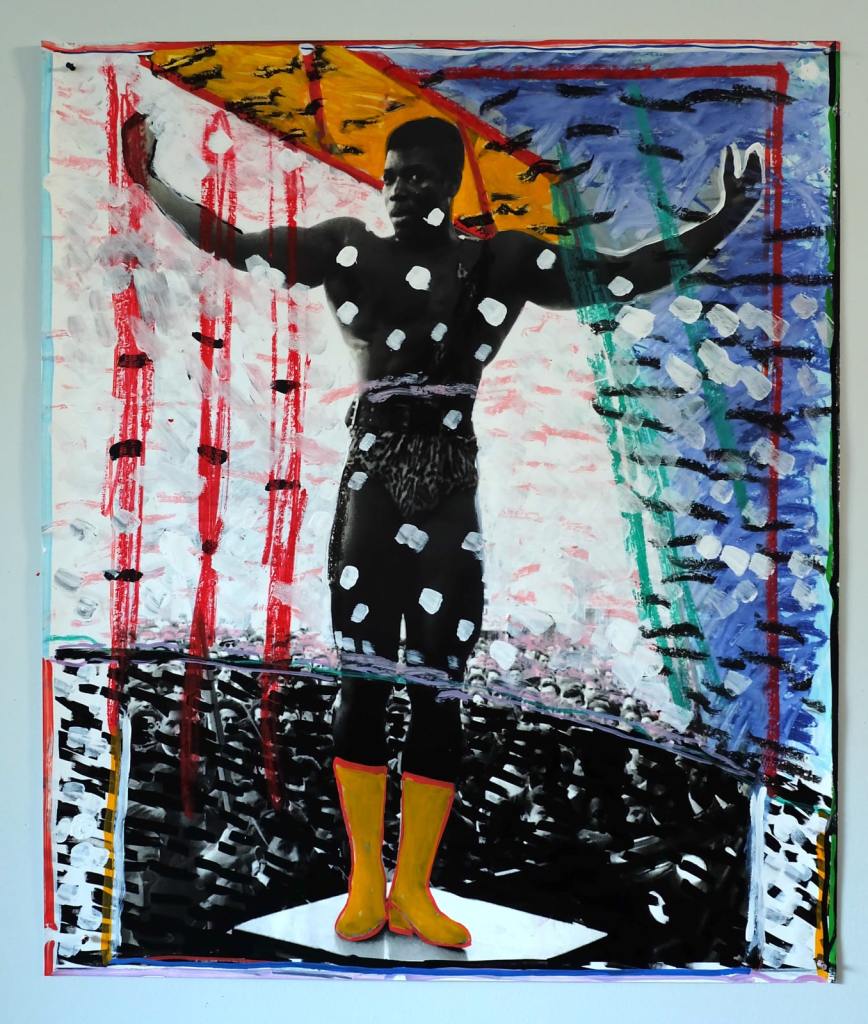
Materials play a symbolic role in Yacine’s practice. He has been known to incorporate unorthodox supports like burlap, denim, and cardboard, integrating everyday materials that speak to both poverty and creativity. In some works he has collaged vintage photographs, textiles, or even vinyl records (as in pieces honoring musical icons like Jimi Hendrix) as a way to infuse the work with cultural memory. The surface of the painting becomes a site of performance and storytelling: Yacine’s physical act of cutting, pasting, and painting is itself a gesture of reclaiming space. Notably, by cutting window-like openings or removing sections of the painted canvas, he exposes the raw wooden stretcher underneath – a bold statement about seeing what usually remains hidden. In A Postcolonial Landscape, these cut-outs “signify the absence of Blackness in the history of painting”, a literal void in the picture that forces the viewer to confront who has been left out. Such narrative strategies demonstrate Yacine’s scholarly undercurrent; he is deliberately dialoguing with art history and social history in the very construction of his images. Yet the work never feels didactic – its vibrant colors, improvisational textures, and even touches of pop culture flair (album covers, graffiti tags, etc.) invite viewers of all backgrounds to engage. Yacine’s art is intellectually layered but visually immediate, using color and form to draw people into a conversation about identity, history, and hope.
Towards Venice: Culminating a Transcontinental Dialogue
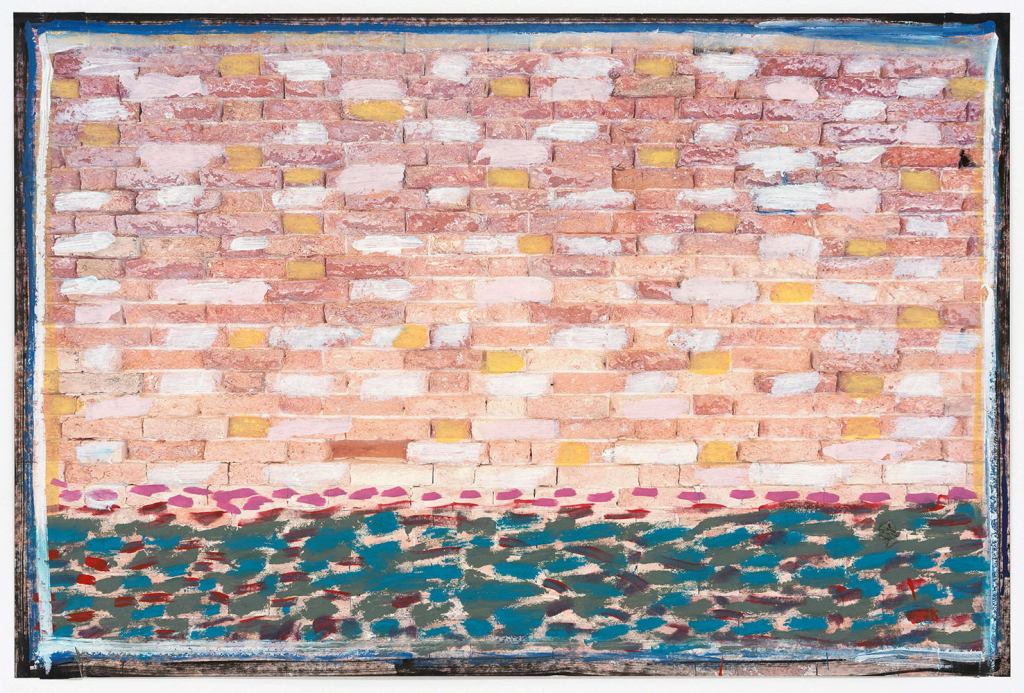
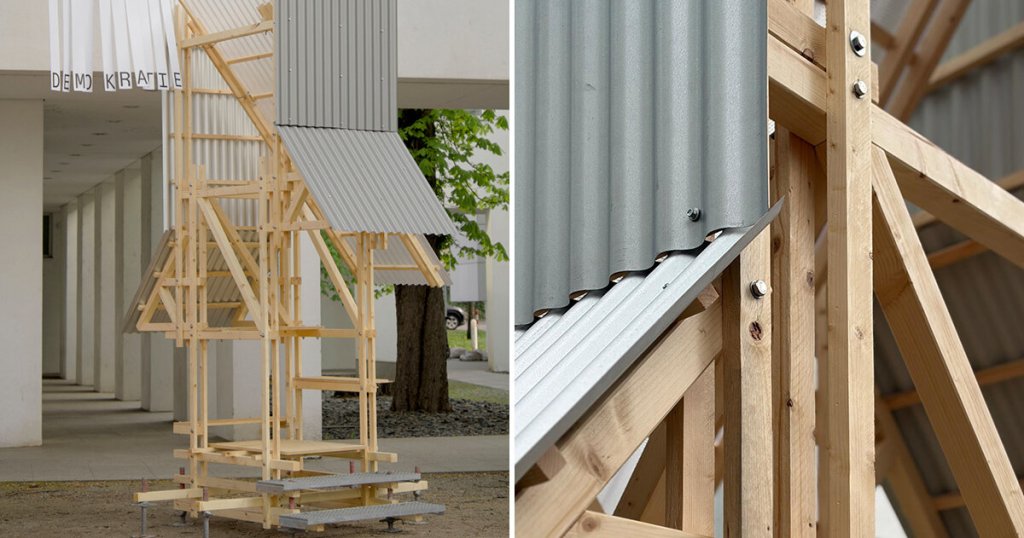
After decades of weaving together threads from Africa, America, and Europe in his work, Modou Dieng Yacine is now poised for a fitting next chapter: Venice. In May 2025, he will debut “Bricks and Grids,” a two-person exhibition at 193 Gallery’s new Venice space, staged as part of the Venice Architecture Biennale. In this forthcoming show – set in a historic Venetian pharmacy turned gallery – Yacine’s paintings will stand in direct dialogue with the city that inspired Black Venezia. The exhibition’s very title Bricks and Grids hints at Yacine’s enduring fascination with architectural forms and urban patterns, and it promises to physically situate his work amid the storied brick facades and canal-side palazzi of Venice. With his art now literally returning to Venice’s Dorsoduro district, Yacine comes full circle: the boy from Saint-Louis who journeyed across the Atlantic will present his vision in the heart of the old Mediterranean world.
This upcoming Venice presentation feels like a culmination of Yacine’s thematic concerns on a grand stage. It will encapsulate the postcolonial dialogue he has been crafting all along – the meeting of African Atlantic histories with European architectural heritage – and do so in a city that has symbolized cross-cultural exchange for centuries. For Yacine, every canvas has been a bridge between worlds, and in Venice those bridges become real. If Utopia Land imagined an ideal place born of two colonial cities, and 26-18 celebrated migrant communities in Chicago and Paris, then Venice 2025 will be a bold new synthesis: a celebration of diaspora identity in the very architecture of the global art world. Audiences and critics are already buzzing with anticipation, and for good reason. Modou Dieng Yacine’s art has always carried a cosmopolitan spirit and an urgency to connect communities. Now, on the international stage of Venice, he is primed to deliver a powerful statement that marries his vibrant visual language with the weight of history. Venice is about to witness the next evolution of Yacine’s creative journey, and if his past projects are any indication, it will be a triumphant fusion of performance, color, architecture, and narrative – a living postcolonial landscape set against the backdrop of the Floating City.
His upcoming show at 193 Gallery in Venice will be on display from May 8 – July 27, 2025
Links
https://www.veniceartguide.it/en/all-you-can-read-archive/


Leave a Reply